
Flutter vs React Native for a Startup MVP in 2026

Short answer: Flutter or React Native for an MVP?
Both are production-ready, so the framework is rarely what makes an MVP succeed or fail. Pick Flutter if you want one team to ship a polished, consistent UI on iOS and Android quickly and you do not already have React developers. Pick React Native if your team already works in React and TypeScript, or you need to share a lot of logic with an existing React web app. Choose the one your team can maintain after launch.
Founders ask me this question often, usually expecting a one-word answer. The honest answer is that the right choice depends less on benchmarks and more on three things: who will build and maintain the app, what the app needs to do, and what else you already have.
I build with Flutter on mobile (MindLeau is a recent example) and with React and TypeScript on the web (PDF Perfect). Here is how I help teams decide.
Start with your team, not the framework
The cost of an app is mostly the cost of the people changing it over the next two years. So the first questions are:
- Do you already have React or TypeScript developers? If yes, React Native lets them contribute from day one. That is a strong argument.
- Are you hiring from scratch or working with a single senior engineer? Then Flutter's single, consistent toolkit often means fewer moving parts to learn and fewer third-party decisions.
- Who maintains it after launch? If an agency builds it and your in-house web team takes over, match their skills.
Then look at what the product needs
- Custom, brand-heavy UI and animation: Flutter draws its own UI, so screens look the same on every device. This is one of its biggest strengths for consumer apps.
- Platform-native look and feel: React Native renders native components, so the app feels more like the platform by default.
- Deep native features (Bluetooth, background processing, unusual hardware): both can do it, but check the plugin or library exists and is maintained before committing. This is where MVP timelines quietly slip.
- Offline-first and local data: both have solid options. In Flutter I use Drift on SQLite; I wrote about that in the MindLeau architecture post.
- AI features: most AI features are API calls to a backend, so the mobile framework matters very little. Keep model keys on the server either way.
And what you already have
If there is an existing React web app, React Native (sometimes with shared TypeScript packages for types, validation and API clients) can remove real duplication. If there is no web app, or the web app is a simple marketing site, that advantage disappears.
Comparison at a glance
| Factor | Flutter | React Native |
|---|---|---|
| Language | Dart | JavaScript / TypeScript |
| UI rendering | Draws its own widgets; identical across devices | Uses native platform components |
| Best fit team | New team or one senior engineer | Existing React / TypeScript team |
| Code sharing with web | Flutter Web exists, best for app-like tools | Strong if you already have a React web app |
| Custom design and animation | Excellent | Good, more work for fully custom UI |
| Third-party ecosystem | Large, check plugin maintenance | Very large, check library maintenance |
| Hiring pool | Growing | Large, overlaps with React web developers |
When the answer flips
- I would lean to Flutter when the product is mobile-first, design-led, and built by a small team that is not already invested in React.
- I would lean to React Native when a React team already exists, the web app is central to the business, or a key library only exists in the JavaScript ecosystem.
- I would consider fully native (Swift and Kotlin) when the app is mostly platform features: widgets, watch apps, heavy background work, or hardware integration.
The mistake that costs more than the framework
The expensive mistakes I see in MVPs are rarely about Flutter versus React Native. They are unclear scope, no plan for release and store review, missing analytics, and architecture that nobody else can pick up. Whatever you choose, plan for those from the start. I cover them in What I Check in a Product Audit Before Launch.
Still deciding? Deciding on stack, scope and architecture before a team spends heavily is exactly what my technical product consulting is for.
Share this article
You Might Also Like
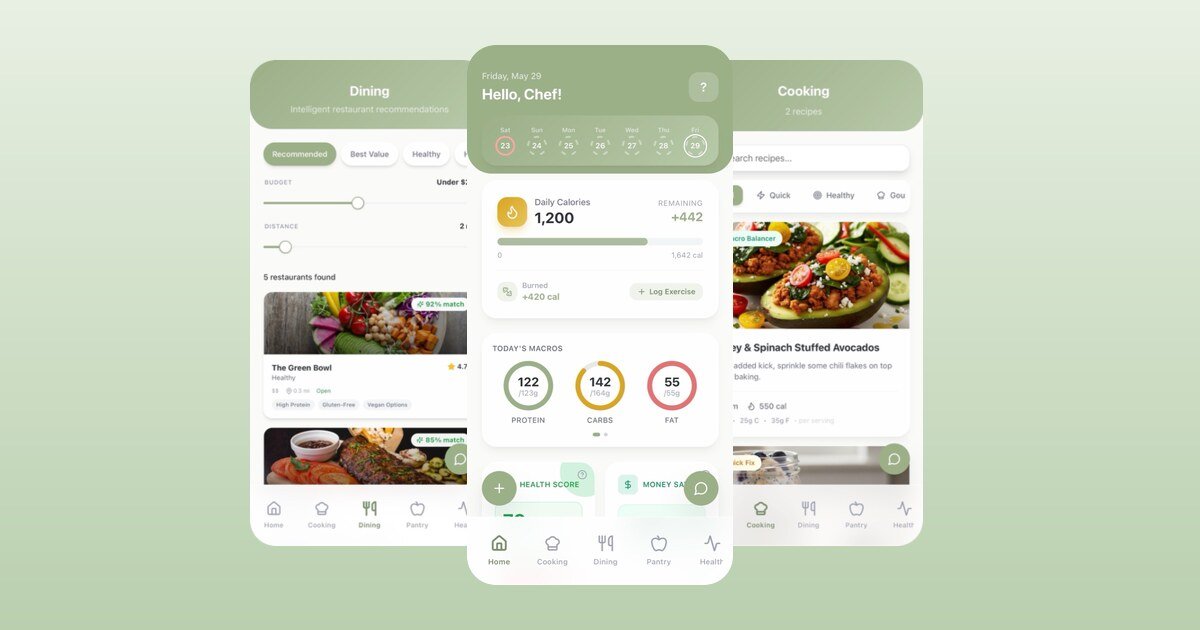
Shipping an AI Health App: Disclosure, Sources and Consent
What it took to get Eats AI, an AI nutrition tracker, ready for the App Store and Google Play: a clear AI disclosure, cited sources for health guidance, separate health-data consent, honest AI failures, and a paywall that can't be bypassed.
Read More →
Built with an AI App Builder? What to Check Before You Submit to the Stores
AI app builders get you a working app fast, but they don't know the store rules. The checklist I used to audit CircleCam, a Rork-built social app, for App Store, Google Play and GDPR before submission.
Read More →
Building Community-Focused Applications
How to build community engagement apps that people return to: features for community growth, user-driven community design, moderation tools and building digital communities on social connection platforms.
Read More →